Ancient Engineering · Gonabad, Razavi Khorasan Province, Iran

Qanats of Gonabad (Qasabeh)

A 33-kilometre river dug by hand in total darkness 2,700 years ago — from a mother well sunk 300 metres into the desert.

Mainstream: c. 700–500 BC (Achaemenid period), maintained and extended ever sinceAlternative: Date not seriously disputed — tradition credits the legendary king Kay Khosrow, and popular accounts stretch the system's age beyond 3,000 years34.33°, 58.68°

At a glance

Qanats of Gonabad (Qasabeh)
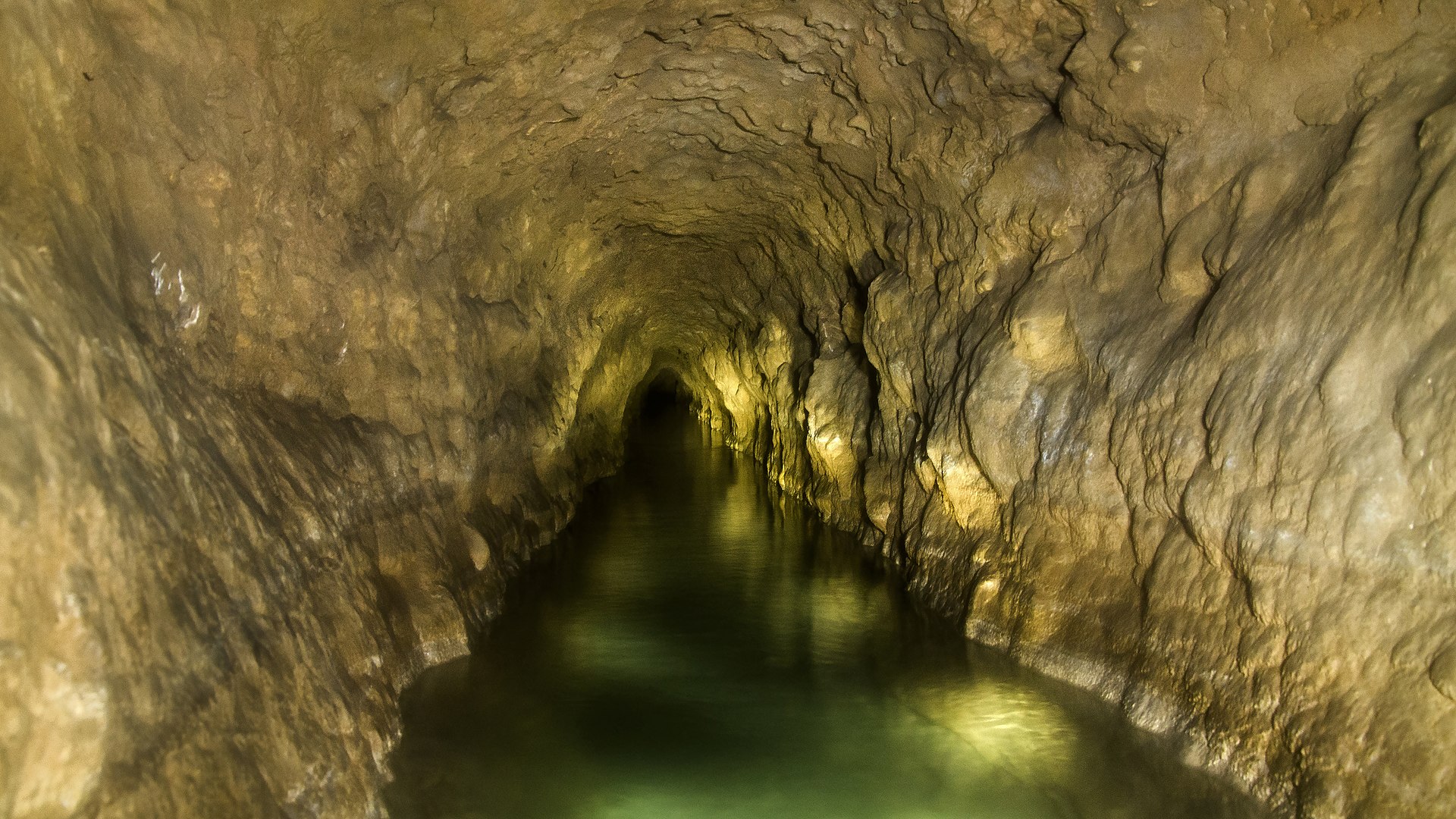
Photo: Tavasoli mohsen · CC BY-SA 4.0

On the edge of Iran's Dasht-e Kavir desert, the town of Gonabad drinks from a river no one can see. The Qasabeh (Ghasabeh) qanat is an underground aqueduct roughly 33 kilometres long, tapping groundwater at the foot of the Siah Kuh mountains and delivering it by gravity alone to fields and homes on the plain. Its 427 vertical shafts, spaced along the tunnel like a line of giant anthills, served the original diggers for spoil removal and air, and still serve their descendants for maintenance today. The deepest of them — the 'mother well' at the head of the system — plunges around 300 metres, roughly the height of the Eiffel Tower, making Qasabeh the deepest qanat ever dug. Qanat technology is Persia's great gift to arid-land civilisation: by tunnelling almost horizontally into a hillside aquifer, engineers created self-flowing wells immune to evaporation, needing no pumps and no dams. The technique spread from Iran across the Middle East, North Africa and as far as Spain and the Americas. In 2016 UNESCO inscribed eleven Iranian qanats as the Persian Qanat World Heritage Site, with Qasabeh listed first as the oldest and grandest of them all — still discharging a steady flow of around 150 litres per second after some 2,700 years.

See it on the globe →
The mainstream view

What archaeology says

Historians of technology, following the French engineer-scholar Henri Goblot's classic studies of the qanat, place Qasabeh's origins in the Achaemenid period, around 700–500 BC — an era when, according to the Greek historian Polybius, Persian kings encouraged qanat-building by granting five generations of water rights to anyone who brought new land under irrigation. The scale of the work is staggering but well understood: specialist hereditary well-diggers called muqanni sank the shaft line first, then tunnelled between shaft bottoms, hauling spoil up by windlass in leather buckets and lining unstable sections with oval baked-clay hoops.

The surveying problem — keeping a gradient of roughly one metre per kilometre over 33 kilometres, steep enough to flow but gentle enough not to erode the tunnel — was solved with instruments the medieval Persian mathematician al-Karaji describes in detail in his treatise The Extraction of Hidden Waters (c. AD 1010), the world's oldest known textbook of hydrogeology: plumb lines, levelling boards, sighting tubes and calibrated ropes lowered down successive shafts to compute relative depths. Underground, the muqanni aligned the heading using pairs of oil lamps sighted along the tunnel axis; the lamp flame doubled as a gas and oxygen alarm. Fieldwork by Iranian scholars such as Mohammad Ajam, and Iran's International Center on Qanats in Yazd, has documented the system's continuous maintenance, its ancient water-sharing rota, and the argument for Achaemenid attribution — while acknowledging that a working qanat is continuously rebuilt, so no single tunnel section can be radiocarbon dated to the foundation era.

Key evidence cited
  • Polybius records Achaemenid-era incentives for qanat construction, matching a foundation around 700–500 BC
  • Al-Karaji's treatise of c. AD 1010 documents the surveying instruments and methods, requiring no unknown technology
  • Henri Goblot's foundational scholarship traces qanat technology's origin and spread from Iron Age Persia
  • The muqanni craft tradition, windlasses, clay tunnel hoops and lamp-sighting techniques are ethnographically documented at Gonabad itself
  • UNESCO's 2016 Persian Qanat inscription accepted Qasabeh as the oldest and deepest of the eleven listed systems
The alternative view

What the skeptics propose

Local and literary tradition tells a grander story: the qanat is the Kariz of Kay Khosrow, dug on the orders of the legendary Kayanian king of the Shahnameh epic — a hero-monarch of Iran's mythic age. The Persian traveller Nasir Khusraw, who visited in AD 1052 and left the first detailed description, records this attribution as established fact, and relates a grim anecdote of travellers thrown down a qanat shaft by bandits, one of whom lived to describe the vast water flowing four farsangs through the darkness. Popular Iranian accounts still push the system's age toward 3,000 years or more, and some link its conception to Cyrus the Great personally.

A different kind of scepticism runs the other way. Some historians of technology have questioned whether the deepest sections — above all the 300-metre mother well, a depth challenging even for modern hand-digging — can really belong to the original Iron Age construction, suggesting instead that Qasabeh grew by stages over many centuries, with the headworks driven deeper as the water table fell, and that the '2,700-year-old' figure conflates a long-lived system with its oldest component. Meanwhile, admirers of ancient engineering, from documentary makers to alternative-history writers, present the qanat builders' feat — surveying millimetre-fine gradients across kilometres of pitch-dark rock with ropes and lamps — as evidence of a sophistication conventional history undersells, occasionally shading into claims of lost instruments or knowledge.

The mainstream rejoinder is that no lost technology is required: al-Karaji's treatise documents exactly the instruments used, the incremental-growth model is not a debunking but a description of how all qanats live and evolve, and the muqanni tradition survived into living memory — the last generations of Gonabad's well-diggers were still cleaning the tunnels by lamplight in the 20th century. The real wonder, both sides agree, is social as much as technical: an institution of maintenance, water law and craft training that kept a hand-dug river flowing without interruption across two and a half millennia of empires, invasions and earthquakes.

Key evidence cited
  • Nasir Khusraw's AD 1052 account already attributes the qanat to the legendary king Kay Khosrow, showing its age was proverbial a millennium ago
  • The 300-metre mother well, a depth extraordinary even by modern hand-digging standards
  • A continuously rebuilt tunnel cannot be directly dated, leaving the true foundation age open
  • Persistent traditions linking the system to Cyrus the Great and to ages beyond 3,000 years
  • The near-impossible precision of maintaining a 1-in-1,000 gradient over 33 km in darkness, cited as underrated ancient science

Genuinely open questions

  1. How much of today's tunnel and the 300-metre mother well belongs to the original construction, and how much to later deepening?
  2. Exactly how did the first surveyors, centuries before al-Karaji wrote the methods down, control the gradient across 33 kilometres?
  3. Can the qanat's flow survive modern motor-pumped wells drawing down the same aquifer that the ancients tapped so sustainably?

Worth knowing

Water shares at Gonabad were timed for centuries with a fenjaan — a brass bowl with a pin-hole floating in a basin that sank at fixed intervals. This 'Persian water clock' was still legally timing irrigation turns at the qanat until 1965, when clocks finally replaced it.