Ancient Engineering · Fars Province, Iran

Persepolis

The ceremonial heart of the Persian Empire — polished grey limestone cut, drilled and fitted with a precision that still draws engineers and mystics alike.

Mainstream: Begun c. 518 BC (Darius I), expanded to c. 330 BC (Achaemenid dynasty)Alternative: Date not seriously disputed — the argument concerns the machine-like precision of the stonework, and Persian legend long credited the 'Throne of Jamshid' to a mythical king served by supernatural builders29.94°, 52.89°

At a glance

Persepolis
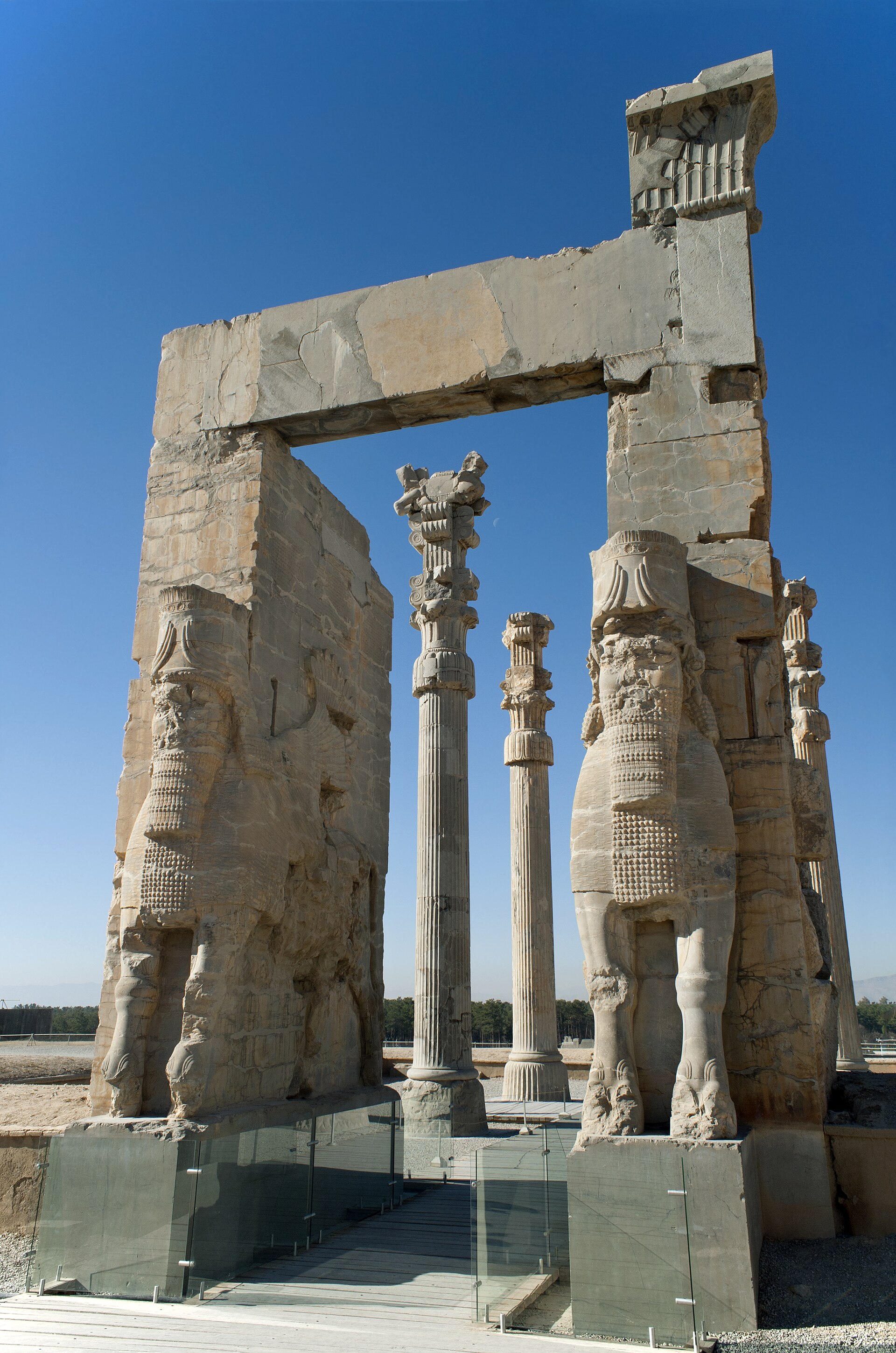
Photo: Ggia · CC BY-SA 3.0

Persepolis — Parsa to the Persians, Takht-e Jamshid ('Throne of Jamshid') in later Iranian tradition — was the ceremonial capital of the Achaemenid Empire, founded by Darius I around 518 BC on a half-natural, half-built terrace of some 125,000 square metres against Mount Rahmat. Monumental double stairways shallow enough to ride a horse up lead to the Gate of All Nations, the hundred-column throne hall and the Apadana audience palace, whose staircase reliefs depict delegates of 23 subject nations bearing tribute. The dark grey limestone was quarried nearby and worked to a marble-like polish; some platform blocks weigh tens of tonnes and are fitted without mortar, joined by iron clamps set in lead. Alexander the Great burned the complex in 330 BC. Excavated scientifically since the 1930s, it is a UNESCO World Heritage site and Iran's archaeological crown jewel.

See it on the globe →
The mainstream view

What archaeology says

Persepolis is one of the best-documented construction projects of antiquity. Foundation inscriptions of Darius I fix the founder and purpose, and the Persepolis Fortification and Treasury tablets — tens of thousands of Elamite administrative texts recovered from the site itself — record the actual workforce: paid labourers and craftsmen (kurtash) of many nationalities, including Egyptians, Ionians, Lydians and Babylonians, receiving rations of grain, wine and silver, with women workers listed and some women recorded as supervisors on equal or higher pay. Slavery built neither the terrace nor the palaces; a multi-ethnic imperial payroll did, and we can read the receipts.

The stone technology has been studied in detail, notably by Ann Britt and Giuseppe Tilia of the Italian restoration mission from the 1960s, and by later researchers cataloguing tool marks across the site and its quarries. The sequence is legible on unfinished blocks: quarrying with iron picks and wedges, rough dressing with pointed and toothed chisels, then fine claw-chisel work and abrasive polishing that gave the grey limestone its lustrous, marble-like surface. Neat cylindrical holes show tube drilling and drill-and-chisel hollowing, and long curved kerfs at Achaemenid sites have been interpreted as the work of large swinging saws — the so-called pendulum saw — used with abrasive to slice stone; iron clamps in lead-caulked sockets tied blocks together against earthquakes. Unfinished column drums, abandoned capitals and a roughed-out gate (the 'Unfinished Gate') freeze every stage of the process in place.

Craft lineages are also traceable: Ionian Greek and Lydian masons' marks appear on Persepolitan stones, and the polish and jointing clearly influenced — or shared ancestry with — later traditions from Mauryan India to the Hellenistic world. For archaeologists, Persepolis is the definitive proof of what organised iron-age craftsmanship could achieve, precisely because the payroll, the quarries, the tool marks and the unfinished pieces all survive together.

Key evidence cited
  • Foundation inscriptions of Darius I naming founder, purpose and construction on the terrace
  • Tens of thousands of Fortification and Treasury tablets recording a paid, multinational workforce
  • Tool-mark studies (Tilia and successors) tracing quarry pick, chisel, tube-drill and saw sequences
  • Unfinished blocks, column drums and the 'Unfinished Gate' preserving every production stage
  • Ionian and Lydian masons' marks tying the stonework to known iron-age craft traditions
The alternative view

What the skeptics propose

Persian tradition itself supplied the first alternative theory: for centuries after the Achaemenids were forgotten, Iranians called the ruins Takht-e Jamshid and held that the mythical king Jamshid had raised them with the help of supernatural beings — the divs or jinn — because no ordinary men could cut and lift such stones. Modern alternative writers have given that instinct a technological turn. Ancient-astronaut authors including David Childress, along with commentators on Ancient Aliens and YouTube researchers in the mould of Praveen Mohan, point to the crisp internal corners of doorways and niches cut from single blocks, surfaces flat and polished across metres, perfectly cylindrical drill holes with regular striations, and long smooth saw cuts in hard limestone — arguing these are signatures of powered machinery, not bronze-age hand tools. Christopher Dunn's machining arguments, developed for Egypt, are routinely extended to Persepolis and to nearby Naqsh-e Rustam, whose giant rock-cut tombs and the enigmatic Kaba-ye Zartosht tower show the same razor-edged precision.

Some proponents go further and suggest the great terrace platform, with its cyclopean polygonal blocks, belongs to an older, pre-Achaemenid horizon — a foundation the Persians inherited and built upon, paralleling claims made about Baalbek's podium. They note the terrace masonry differs in character from the palace masonry above it, and that Darius chose an oddly remote site if he was starting from nothing.

Mainstream archaeologists answer point by point: the drill holes and kerfs match iron tube drills and abrasive saws demonstrated experimentally; striations and unfinished cuts show tool chatter and restarts inconsistent with powered machining; the terrace is bonded to dated Achaemenid construction and its blocks carry the same masons' marks; and the fortification tablets document the actual multinational workforce year by year. The precision, they argue, is what an empire's best-paid craftsmen produce over two centuries. Yet even sober specialists concede the finest Achaemenid surfaces — like the mirror-black polish of the Kaba-ye Zartosht — represent a level of finish whose exact abrasive recipes and time costs remain unreconstructed.

Key evidence cited
  • Crisp single-block doorframes, flat polished faces and sharp internal corners read as machining
  • Perfectly cylindrical tube-drill holes and long uniform saw kerfs in hard limestone
  • The cyclopean terrace masonry claimed as an older, pre-Achaemenid foundation
  • Persian legend attributing the 'Throne of Jamshid' to supernatural builders
  • The unreplicated mirror polish of monuments like the Kaba-ye Zartosht at Naqsh-e Rustam

Genuinely open questions

  1. What abrasives and finishing techniques produced the near-mirror polish on Achaemenid grey limestone?
  2. Were large pendulum-type saws really in use, and how were they rigged and driven?
  3. How much of Persepolis remained unfinished when Alexander burned it — and was the burning accident or policy?

Worth knowing

When Alexander looted Persepolis in 330 BC, ancient sources say the treasury's haul needed 10,000 mule carts and 5,000 camels to carry away — then his army burned the palaces, possibly in revenge for Xerxes' burning of Athens.