What archaeology says
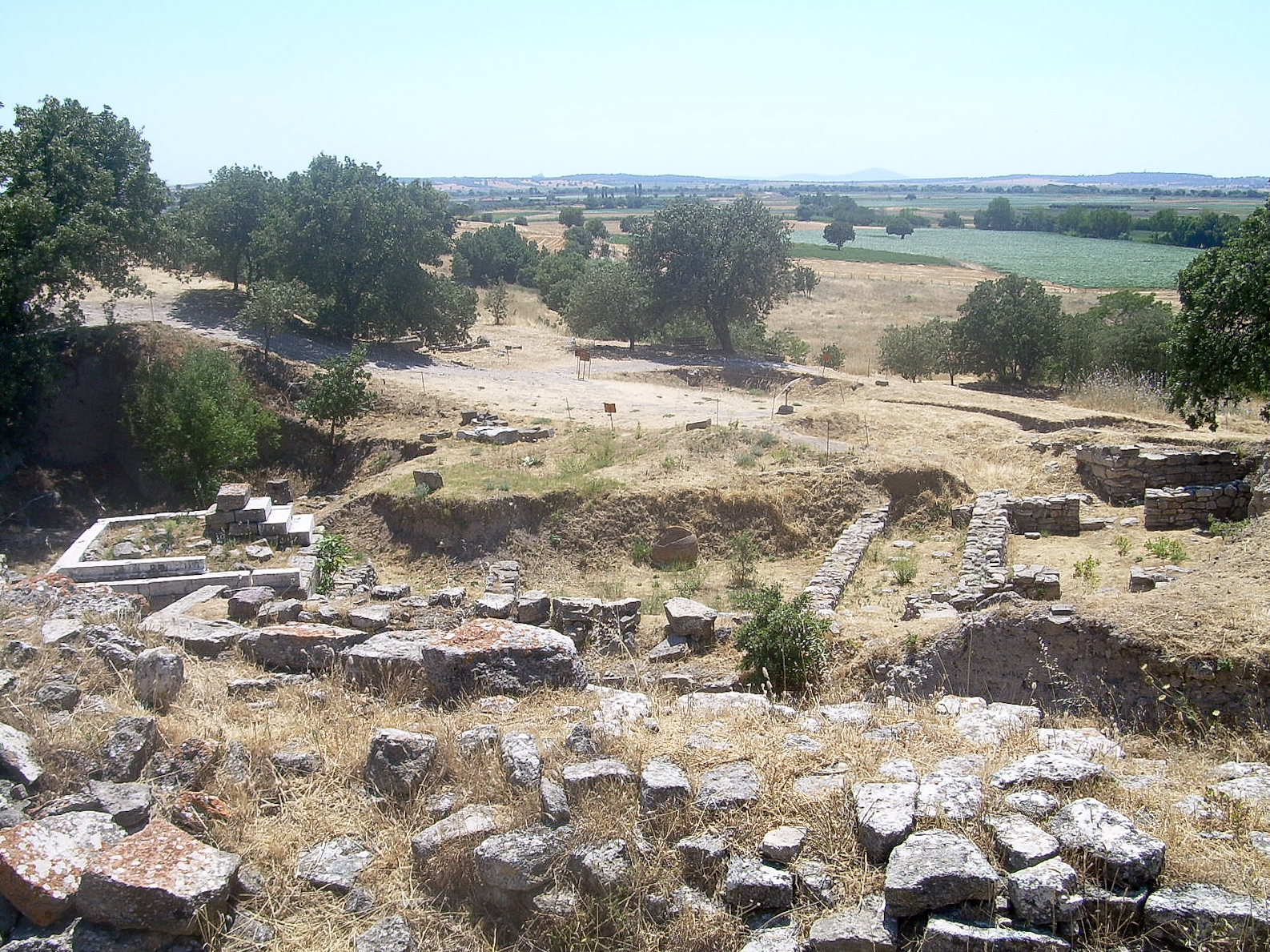
Modern archaeologists are confident that Hisarlik is the Troy of Greek tradition, and that the site was a real, strategically placed Bronze Age stronghold controlling access to the Black Sea. The identification was first argued by the British consular official and amateur archaeologist Frank Calvert, who owned part of the mound and had begun digging there before he persuaded the wealthy German businessman Heinrich Schliemann to fund a major excavation. Schliemann dug from 1870, driving a huge trench across the hill and announcing in 1873 the discovery of a hoard of gold he theatrically named 'Priam's Treasure'. He later admitted embellishing the circumstances of the find, and the treasure was in fact roughly a thousand years too early to belong to any Homeric king.
The picture was transformed by Manfred Korfmann, who directed excavations from 1988 until his death in 2005. Using magnetometry and careful digging, his team revealed that the citadel Schliemann had exposed was only the acropolis of a much larger lower city, defended by a rock-cut ditch — a settlement of perhaps 5,000 to 10,000 people, big enough to matter. Independently, Hittite scholars had been reading cuneiform tablets that name a north-west Anatolian kingdom called Wilusa (widely equated with Greek Wilios/Ilios) and a people called the Ahhiyawa (widely equated with the Achaeans, Homer's name for the Greeks). The layer usually linked to any historical war, Troy VIIa (also labelled VIi), shows destruction by fire, sling-stones, arrowheads and hastily buried bodies around 1180 BC. Recent seasons under Rüstem Aslan have added fresh weapon deposits and burn layers to that dossier.
- Nine-plus stacked settlement layers at Hisarlik matching a long-lived, strategically sited Bronze Age stronghold
- Korfmann's discovery of a large lower city with a defensive ditch, far bigger than Schliemann's citadel alone
- Hittite tablets naming the kingdom Wilusa (Wilios/Ilios) and the Ahhiyawa (Achaeans/Greeks) in north-west Anatolia
- Destruction by fire in Troy VIIa around 1180 BC with sling-stones, arrowheads and unburied bodies
- New weapon deposits and burn layers from the 2024–2025 seasons under Rüstem Aslan