Origins of Civilisation · Valsequillo Basin, near Puebla, Mexico

Hueyatlaco

The quarter-million-year date that launched a thousand 'forbidden archaeology' arguments.

Mainstream: c. 12,000-40,000 years ago (disputed; most archaeologists reject the deep dates)Alternative: c. 250,000 years ago18.92°, -98.17°

At a glance

Hueyatlaco
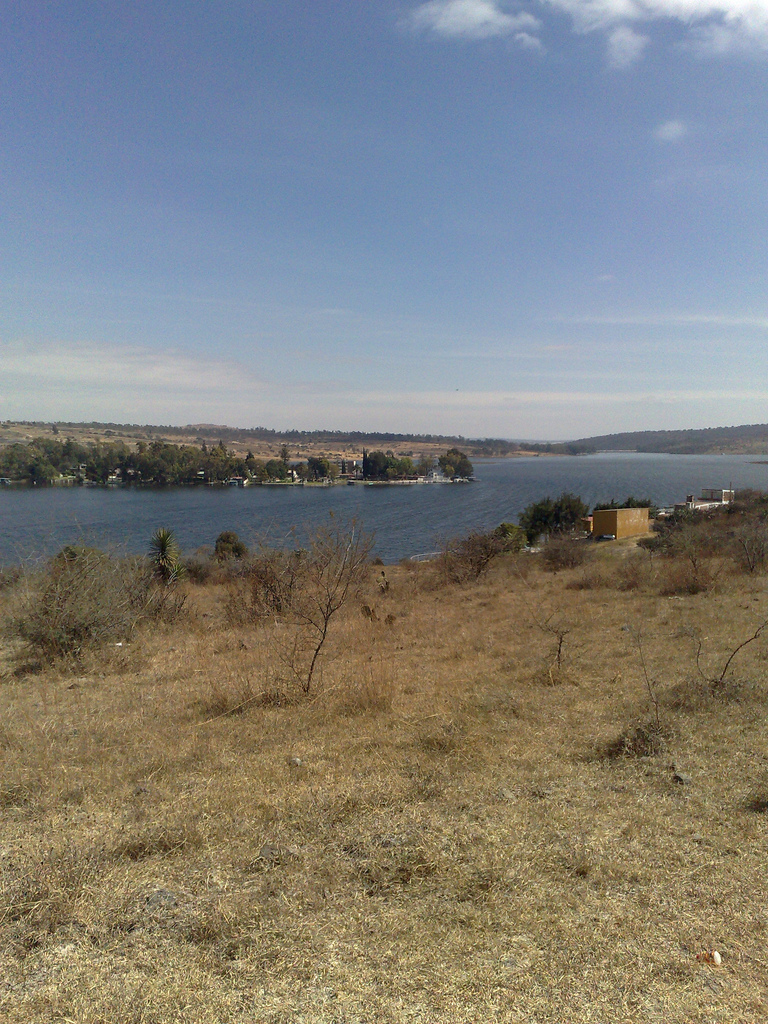
Photo: Wikimedia Commons · CC BY-SA 2.0

Hueyatlaco is a butchering and tool site in the Valsequillo Basin south of Puebla, excavated in the 1960s by a team led by Cynthia Irwin-Williams. Stone tools were found in apparent association with the bones of extinct animals. When the site's geologists returned independent dates of roughly 250,000 years, the archaeological establishment balked, and a decades-long standoff between the excavators and their own dating specialists began. The dispute has since become a touchstone for anyone arguing that mainstream science suppresses inconvenient dates.

See it on the globe →
The mainstream view

What archaeology says

Most archaeologists accept that Hueyatlaco contains genuine stone tools associated with extinct fauna, but reject the extraordinary antiquity assigned by the geological dating team. The consensus view is that something went wrong with the dating, most plausibly that the volcanic and sedimentary material analysed had been reworked, redeposited or contaminated, yielding ages far older than the actual human occupation. Comparable tool forms elsewhere in the Americas are tens of thousands of years old at most, and a 250,000-year human presence in Mexico would require Homo erectus or archaic humans crossing into the New World with no supporting fossil, genetic or corroborating archaeological record anywhere.

The excavator, Cynthia Irwin-Williams, herself never endorsed the 250,000-year figure and argued the geological samples did not securely date the artefact-bearing layers. Later reviews of the Valsequillo sequence have emphasised the difficulty of correlating the dated tephras with the specific beds in which tools were found, and the possibility of stratigraphic disturbance in a dynamic river-basin setting.

The broader shift in the field is worth noting: the discipline has moved decisively away from the old "Clovis first" barrier of about 13,000 years and now accepts several pre-Clovis sites in the 15,000-20,000-year range. But that shift has been driven by well-dated, replicable sites, and Hueyatlaco's dates sit an order of magnitude beyond anything the evidence elsewhere can support.

Key evidence cited
  • Tool forms and faunal associations are real, but a 250,000-year human presence has no supporting hominin fossils anywhere in the Americas.
  • The Valsequillo Basin is a dynamic fluvial setting prone to reworking and redeposition of older volcanic material into younger beds.
  • Excavator Cynthia Irwin-Williams disputed that the geological samples securely dated the artefact-bearing layers.
  • No genetic or corroborating archaeological record supports archaic humans reaching the New World hundreds of millennia early.
  • Accepted pre-Clovis sites cluster around 15,000-20,000 years, a wholly different order of magnitude.
The alternative view

What the skeptics propose

The alternative case rests on the work of geologist Virginia Steen-McIntyre, who with Harold Malde and Roald Fryxell applied four independent techniques - uranium-thorium dating, fission-track dating, tephra-hydration dating and mineral-weathering analysis - and found they converged on an age of roughly 250,000 years. Their 1981 paper in Quaternary Research defended this figure, and Steen-McIntyre has spent the decades since arguing that the data were sound and that the profession's refusal to engage cost her professionally.

Michael Cremo and Richard Thompson made Hueyatlaco a centrepiece of their 1993 book Forbidden Archeology, presenting it as a case study in what they call a "knowledge filter" - the tendency of the scientific mainstream to ignore or bury anomalous evidence that contradicts the accepted timeline of human evolution. In that framing, Steen-McIntyre becomes a scientist punished for reporting what her instruments told her.

The current standing is that the deep dates remain outside the scientific consensus and are not accepted by working archaeologists, while a devoted body of alternative-history writers continues to treat Hueyatlaco as unresolved. Even sympathetic geologists concede the central problem has never been cleanly settled: the dating specialists and the archaeologists could not agree on what the dated material actually dated.

Key evidence cited
  • Four independent dating techniques reportedly converged on roughly 250,000 years for the deposits.
  • The 1981 Quaternary Research paper by Steen-McIntyre, Malde and Fryxell defended the deep age in a peer-reviewed venue.
  • Bifacial tools and finely made points appear more sophisticated than expected for such early dates, which proponents read as genuinely anomalous.
  • Steen-McIntyre reports professional marginalisation after refusing to retract, cited as evidence of a suppressive climate.
  • The dispute was never resolved by an agreed re-dating that reconciled the geologists and archaeologists.

Genuinely open questions

  1. Did the dated tephras and sediments actually correspond to the beds containing the tools, or to older reworked material?
  2. Can modern high-resolution dating be reapplied to securely provenance samples from the original artefact layers?
  3. Why did four different techniques agree on such an old age if the true occupation was far younger?
  4. How much of the controversy is a genuine dating problem versus a breakdown in communication between specialists?

Worth knowing

The four dating methods used at Hueyatlaco were so unusual for the 1970s that the resulting 250,000-year figure was, for a time, one of the most thoroughly cross-checked and least believed dates in American archaeology.