Belief & Society · Zyuratkul ridge, Southern Urals, Russia

The Zyuratkul Moose Geoglyph

A 275-metre stone moose on a Urals hillside, found on satellite imagery — and possibly older than every other geoglyph known.

Mainstream: Contested — stone tools at the site typologically dated c. 4000–2000 BC (Eneolithic), but the figure itself is undatedAlternative: c. 6000–4000 BC claimed, which would make it the oldest known geoglyph on Earth54.94°, 59.19°

At a glance

The Zyuratkul Moose Geoglyph
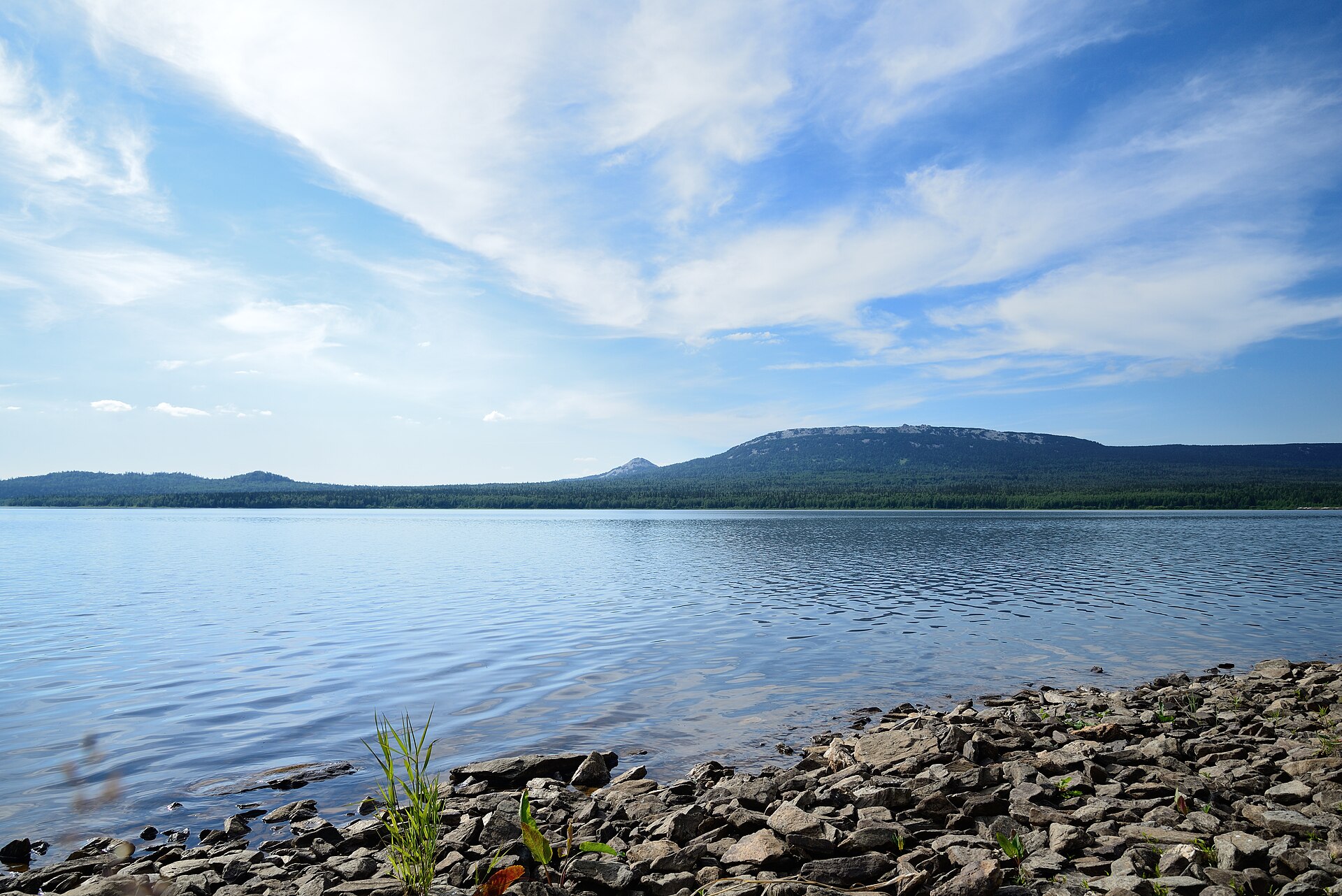
Photo: MikhailAzarov · CC BY-SA 4.0

In 2011 a local enthusiast named Alexander Shestakov noticed an animal-shaped outline on satellite images of the slopes above Lake Zyuratkul, high in the Southern Urals. Investigation on the ground revealed a figure about 275 metres long depicting an elk or moose with muzzle, legs and antlers, built not by scraping the surface like Nazca but by constructing low walls of fitted stones, originally perhaps half a metre high, later buried under turf. Excavations led by Stanislav Grigoriev of the Russian Academy of Sciences uncovered the walls' structure — larger boulders edging a fill of smaller stones — along with well over a hundred stone tools of a style suggesting the Eneolithic, the copper-stone age of the fourth to third millennium BC or earlier. If the older end of the proposed range is right, the moose predates the Nazca Lines by thousands of years.

See it on the globe →
The mainstream view

What archaeology says

The excavators' claim is itself the bold one here, and much of mainstream archaeology remains cautious. Grigoriev's team argued from tool typology — the small quartzite implements resemble Neolithic and Eneolithic forms — and from the structure's stratigraphy that the figure was built somewhere between the sixth and third millennium BC, announcing it as potentially the world's oldest geoglyph. The construction technique is unlike anything else known in the region: hunter-fisher communities around the Urals lakes left settlements and copper workings, but no other monumental land art, making the moose either unique or the sole survivor of a vanished tradition.

Sceptical colleagues note the weaknesses candidly acknowledged in the debate: stone tools cannot directly date a stone wall (they could be older material incorporated in the fill), no radiocarbon or OSL determination has securely fixed the construction, and an isolated masterpiece with no cultural context is exactly the situation where dating errors thrive. Some researchers suspect the figure could be substantially younger — even medieval. The site was partly re-buried to protect it, and without further dating work the moose remains an accepted structure with an unresolved age.

Key evidence cited
  • Excavated wall structure — boulder edging with rubble fill — confirming deliberate construction
  • 150+ stone tools recovered from the figure, typologically Neolithic–Eneolithic
  • Grigoriev's published stratigraphic case for a 4th–3rd millennium BC or earlier date
  • No modern or historical record of the figure's construction, arguing against recent origin
  • Partial reburial and conservation by the national park confirming the structure's archaeological status
The alternative view

What the skeptics propose

For the alternative-history literature the Zyuratkul moose is a gift: a geoglyph of Nazca-like scale in the Russian forest-steppe, plausibly older than the pyramids, visible in full only from the air — and standing on a ridge from which no viewer on the ground could ever have seen it whole. Writers highlight the same details the excavators do, but push the implications further: the figure implies coordinated labour, geometric planning and a symbolic tradition among supposedly simple Ural hunter-gatherers, and joins Göbekli Tepe in the argument that monumental abstraction long precedes agriculture and cities. The moose also features in claims of a lost circumpolar or Eurasian tradition of animal effigies, linked by some to the effigy mounds of North America.

The sober counterpoints are the dating gap and the viewing-angle fallacy — a hillside figure reads adequately from the opposite slope or the frozen lake below, and building by plan does not require seeing the result from above, as the desert-kite blueprints of Jordan proved. But even the sceptics' position leaves something remarkable: whoever built it, at whatever date, laid out a coherent 275-metre animal in fitted stone on a mountainside, and no one recorded, remembered or repeated the achievement anywhere in the surrounding thousand kilometres.

Key evidence cited
  • If the early dating holds, it is the oldest geoglyph on Earth by a wide margin
  • A 275-metre planned animal figure implies organised labour among pre-agricultural communities
  • The figure is fully legible only from significant altitude above the ridge
  • No cultural context or successor tradition exists — a sophistication apparently from nowhere
  • Claimed parallels with animal effigy traditions on other continents

Genuinely open questions

  1. When exactly was the moose built — Eneolithic, Bronze Age, or far later?
  2. Who was it for: the community on the lakeshore below, spirits above, or the builders themselves?
  3. Is it truly unique, or are more turf-covered stone figures awaiting discovery in the Urals?

Worth knowing

The moose was hiding in plain sight on a popular hiking ridge: thousands of walkers had crossed its stone lines for years, assuming they were natural scree, until a man idly studying satellite images of his local lake noticed the antlers.