What archaeology says
Egyptologists attribute the pyramid to Djedefre, the 4th Dynasty king who ruled between Khufu and Khafre in the mid-third millennium BC. For much of the twentieth century it was assumed the monument was abandoned unfinished when Djedefre died after a short reign — Vito Maragioglio and Celeste Rinaldi argued it never rose far above its base. The Franco-Swiss mission that worked at the site from 1995, directed by Michel Valloggia with Michel Baud, overturned much of that picture: their excavations, published in 2011, indicated the pyramid was substantially built, perhaps more than half finished and possibly completed, with an unusually generous use of red granite casing on its lower courses.
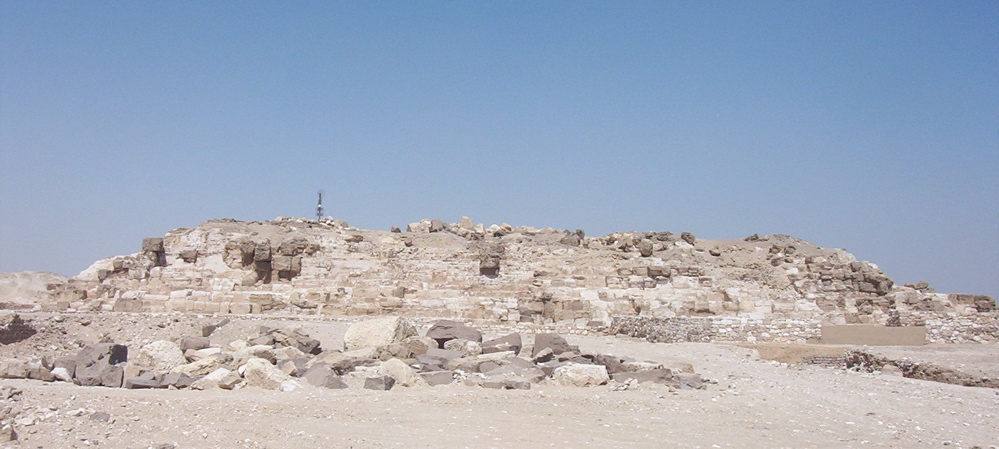
The ruinous state of the monument is explained not by ancient failure but by later stone-robbing. Quarrying began by the end of the New Kingdom at the latest and became industrial in scale during the Roman and early Christian eras, when the pyramid served as a convenient quarry for the region. The process was still running in the nineteenth century: Flinders Petrie recorded stone being carted off at a rate of three hundred camel-loads a day.
Far from being a marginal monument, Abu Rawash is read by mainstream scholars as evidence of dynastic politics — Djedefre's decision to build away from Giza, and his adoption of the title Son of Ra, mark an important religious shift towards the solar cult that would dominate the 5th Dynasty.
- Franco-Swiss excavations (1995-2005, Valloggia and Baud) found the pyramid was substantially built, not barely begun
- Quarry marks and workmen's graffiti tie the monument to Djedefre's reign
- Roman and Coptic-era spoil heaps document centuries of systematic stone removal
- Petrie witnessed 300 camel-loads of stone leaving the site daily in the 19th century
- The 21 x 9 metre descending trench matches standard 4th Dynasty substructure design
- A famous quartzite head of Djedefre was found in the boat pit beside the pyramid