What archaeology says
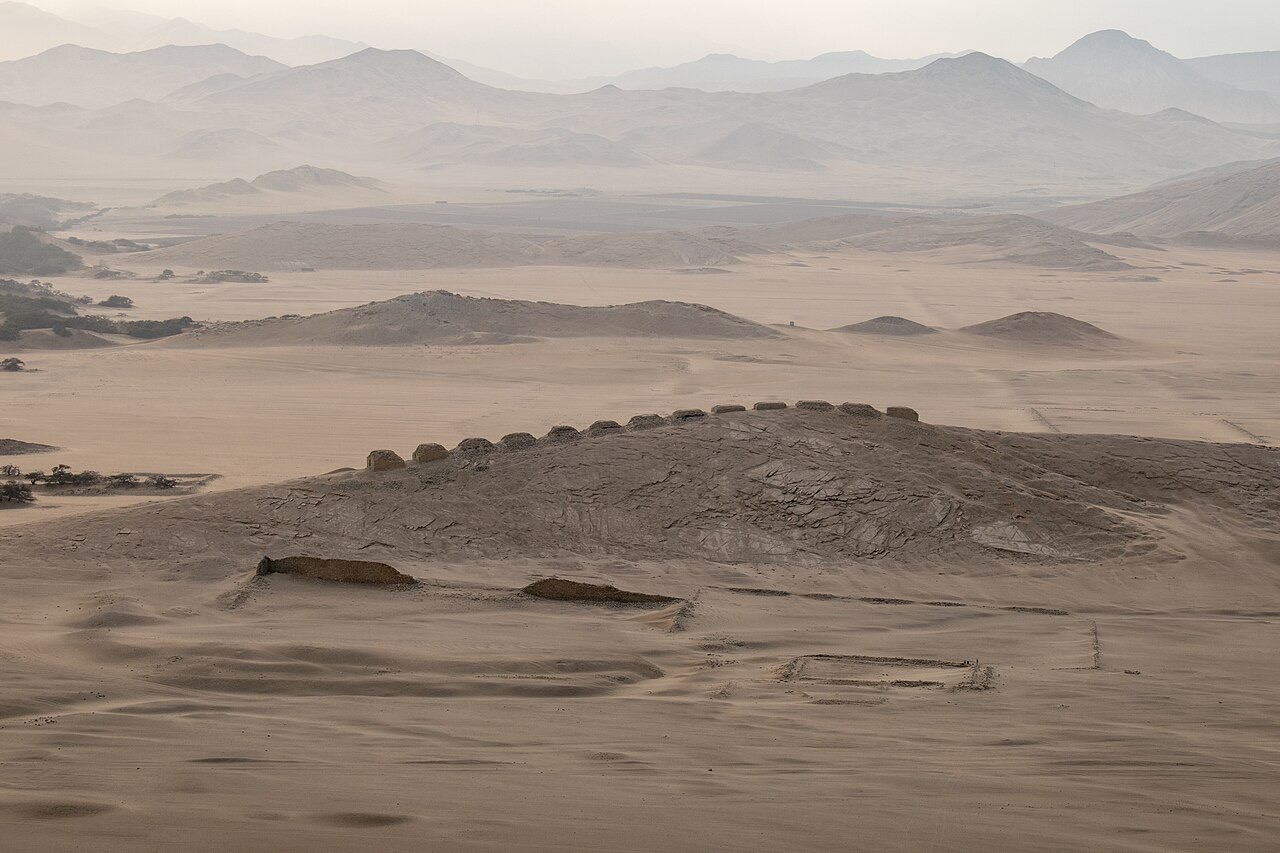
Ghezzi and Ruggles showed that the thirteen towers, spaced to create a toothed artificial horizon roughly 300 metres long, span the full annual range of sunrise and sunset positions when viewed from two purpose-built observation points. The gaps between towers divide the year into regular intervals of about ten days, allowing the sun's date to be read to within two or three days — an operational calendar in stone, built around 250-200 BC during Peru's Early Horizon period, more than 1,700 years before the Inca sun pillars described by Spanish chroniclers.
The wider complex includes a heavily walled hilltop building long interpreted as a fortress, but its gates, ceremonial layout and lack of water supply have led Ghezzi to argue it was a fortified temple of the sun cult. Pottery, shell offerings and warrior iconography suggest ritual combat and solar ceremony were intertwined here.
The society that built Chankillo remains poorly understood; the site was damaged and abandoned within decades, possibly in conflict, and no direct successor tradition survived. Its sophistication implies centuries of accumulated horizon astronomy in the Casma-Sechin culture area beforehand.
- From the western observing point, sunrise sweeps the full tower row exactly between the two solstices, verified by modern survey and simulation
- Radiocarbon dates on wooden lintels and offerings place construction and use at about 250-200 BC
- Two dedicated observation platforms sit at the correct positions to the east and west of the ridge, with concentrations of offerings including shell trumpets
- The tower gaps divide the solar year into near-equal intervals, consistent with a working calendar rather than symbolic display
- UNESCO's 2021 inscription followed detailed evaluation of the astronomical case by international experts